
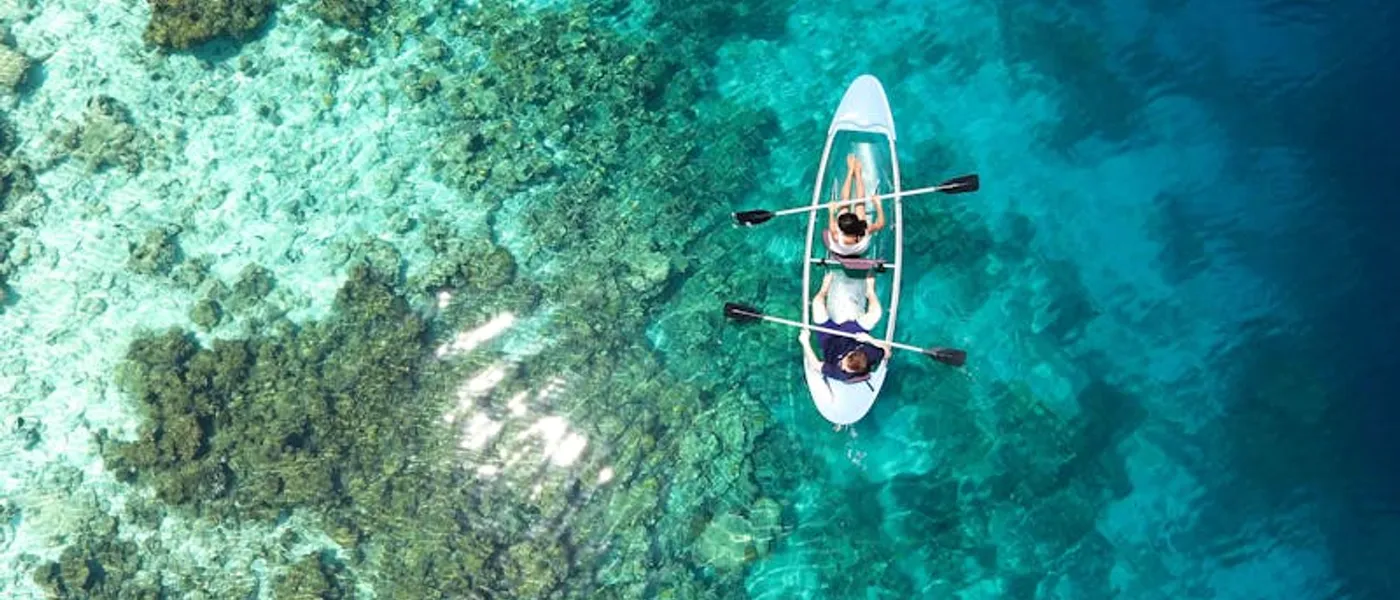
In the middle of the Strait of Bonifacio, between Corsica and Sardinia, lies an archipelago of almost surreal beauty. The Lavezzi Islands are a chain of granite rocks polished by wind and waves, set in waters whose colours rival the most beautiful tropical lagoons. White sand, translucent turquoise waters, teeming marine life: the Lavezzi offer a Caribbean interlude in the heart of the Mediterranean.
Designated a nature reserve since 1982, the entire archipelago is protected, which explains the richness of its marine biodiversity and the purity of its waters. The excursion to the Lavezzi, departing from Bonifacio, is one of the most popular boat trips in Corsica, and arguably the most spectacular for swimming and snorkeling enthusiasts.
A granite archipelago shaped by the elements
Geography and geology
The Lavezzi archipelago comprises around twenty islets and reefs, the largest of which, Lavezzu (or Lavezzi), measures approximately 1.5 kilometres long and 500 metres wide. The total land area is about 65 hectares, but the surrounding marine reserve extends over more than 5,000 hectares.
The rocks are made of alkaline granite, the same stone found in southern Corsica and northern Sardinia. Wind erosion has carved these boulders into rounded shapes, stacked on top of one another in improbable balancing acts. These tafoni (cavities hollowed into the rock) and natural stacks create a moon-like landscape where every boulder looks as though it was placed there by a sculptor.
An exceptional marine environment
The waters around the Lavezzi are among the richest in the western Mediterranean. Posidonia seagrass beds, the true lungs of the Mediterranean, carpet the sandy seabed and serve as a nursery for juvenile fish. The rocky reefs host brown groupers (a protected species whose population has grown significantly since the reserve was established), sea bream, rainbow wrasse, moray eels and octopus.
Underwater visibility regularly reaches 25 to 30 metres, placing the Lavezzi among the finest snorkeling spots in France. The shallow waters around the beaches allow you to observe abundant marine life at just 1 to 2 metres depth, making the activity accessible to everyone.
The crossing from Bonifacio
The shuttle journey
Shuttles to the Lavezzi depart from Bonifacio harbour and make the crossing in 25 to 35 minutes. Several companies run regular services from April to October, with departures every 30 minutes to 1 hour in high season. Most packages include a pass along the Bonifacio cliffs before heading out to the archipelago.
The Strait of Bonifacio can be choppy, especially in north-westerly winds. Crossings are cancelled when the sea is too rough. Modern shuttle boats are stable, but those prone to seasickness will appreciate calm-weather days. Check the forecast before booking.
By private boat
Hiring a boat (with or without a skipper) lets you explore the archipelago at your own pace and access coves that the shuttles do not serve. This is the ideal option for divers, photographers or families wanting to avoid the crowds at the main beaches. Note: anchoring is prohibited in posidonia zones and regulated everywhere else. Use the eco-friendly mooring buoys provided.
What to do on the Lavezzi Islands
Beaches and swimming
The main island has several white sandy beaches tucked between granite boulders. The landing beach, where the shuttles dock, is the busiest but remains gorgeous. A 10 to 15 minute walk along waymarked paths between the rocks reveals more secluded coves.
The water is breathtakingly clear. Shades range from turquoise to lagoon blue depending on the depth and time of day. Water temperature hovers between 22 and 26 degrees from June to September, making the Lavezzi one of the most pleasant swimming spots in Corsica.
Snorkeling
Snorkeling is the star activity at the Lavezzi. Equip yourself with a mask, snorkel and water shoes (the rocks are sharp and sea urchins are present) and explore the shallows near the beaches. Within minutes of swimming, you will spot schools of bream and mullet, colourful rainbow wrasse, starfish and, with luck, groupers sitting motionless in rocky crevices.
The best snorkeling spots are around the rocky points and in the channels between islets, where the current attracts fish. Always stay within permitted areas and do not touch sea urchins, coral or marine animals.
Walking around the island
A waymarked trail circles the main island in about 1 hour 30 minutes to 2 hours. The walk traverses an extraordinary mineral landscape, punctuated by small beaches, secret coves and views across to Sardinia close by. You pass the marine cemetery, which holds the graves of sailors from the frigate La Semillante, wrecked in the Strait of Bonifacio in 1855 with over 700 men aboard.
The trail is easy but entirely exposed to the sun, with no shade. Bring a hat, sunscreen and plenty of water. Sturdy shoes are recommended for the rocky sections.
Nature reserve rules
The Lavezzi are a protected natural area subject to strict rules:
Prohibited: camping and bivouacking, fires, fishing, collecting sand, shells or plants, littering, disturbing wildlife. Dogs are not allowed on the islands.
Required: stay on waymarked trails, take all your rubbish with you (there are no bins on the island), respect mooring zones. Smokers must use a pocket ashtray.
These rules are essential to preserving the beauty and biodiversity of the archipelago. Reserve wardens are present on the island in season and can issue fines to those who do not comply.
Practical tips for your excursion
What to pack
Plenty of water (at least 1.5 litres), a packed lunch, high-factor sunscreen, a hat, sunglasses, mask and snorkel, water shoes, a towel, and a rubbish bag for your waste. A light windbreaker can be useful for the crossing.
When to go
Shuttles run from April to October. Peak season (July-August) sees up to 2,000 visitors per day on the island, which can detract from the experience. Choose June or September for warm seas, moderate crowds and generous sunshine. Early morning departures let you enjoy the beaches before the mass arrival of the 11am shuttles.
The Lavezzi in your southern Corsica stay
The Lavezzi excursion pairs perfectly with a visit to the Bonifacio cliffs and caves: most packages include both. Plan at least two days in Bonifacio to fully enjoy the boat trips and the old town.
To discover the other maritime gems of Corsica, see our guide to boat excursions. And for complete trip planning, our excursion guide covers all the activities available on the island.
Frequently asked questions
How long should I spend on the Lavezzi Islands?
Are there any shops on the Lavezzi Islands?
Can you camp on the Lavezzi Islands?
Is snorkeling at the Lavezzi suitable for beginners?
Ready to explore Corsica?
Check our guides to plan your excursions, hikes and boat trips to the most beautiful spots on the island.
See the full guide