
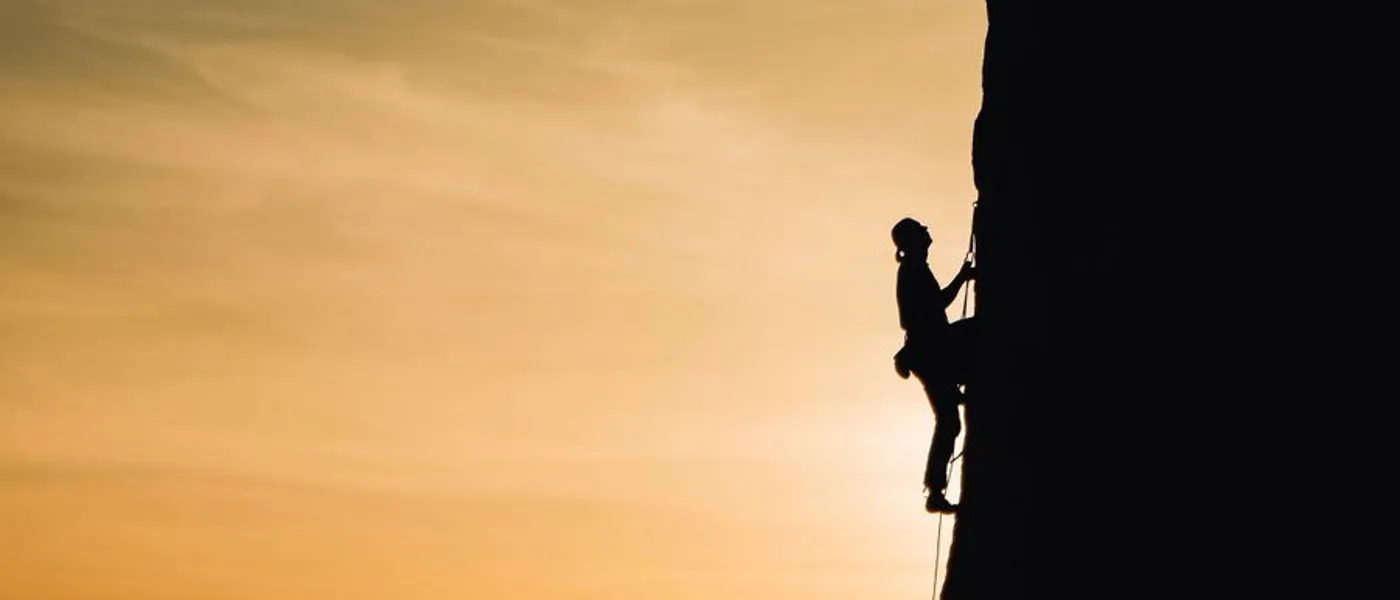
Via ferrata (literally "iron road" in Italian) offers the perfect middle ground between hiking and climbing. Fixed to the rock face itself, cables, metal rungs, monkey bridges, and walkways allow you to progress across cliffs that would otherwise be inaccessible, all while enjoying vertiginous panoramas in complete safety. Corsica, with its spectacular granite landscapes and deep valleys, offers several via ferrata routes that rank among the finest in France.
Tizzarella via ferrata: the Corsican benchmark
Located in the upper Asco valley, about 45 minutes' drive from Corte, the Tizzarella via ferrata is the most celebrated on the island. Set on a granite wall overlooking the Asco torrent, it offers an exceptional natural setting with plunging views down to the gorges and natural pools below.
The routes
Tizzarella offers three routes of increasing difficulty, making it a site suitable for all abilities:
- Discovery Route (K2): 200 metres long, 1 to 1.5 hours. Ideal for beginners and families. Moderately exposed passages, well-spaced holds. Accessible from age 10.
- Sporty Route (K3-K4): 350 metres, 2 to 2.5 hours. Overhanging sections, cable traverses, and a monkey bridge above the torrent. Requires good fitness and upper-body strength.
- Extreme Route (K5): An additional 150 metres of pronounced overhang and roof sections. Reserved for experienced climbers. The "roof" passage demands excellent forearm endurance.
Access and practical information
From Corte, take the D623 towards the Asco valley. The car park is at the Tizzarella bridge, about 12 km before the village of Haut-Asco. The approach walk is short (10 minutes). The site has a reception desk where you can hire equipment (via ferrata lanyard, harness, helmet) for 15 to 20 euros. Certified guides offer supervised outings.
The via ferrata is open from May to November. In high summer, choose morning slots (before 10 am) or late afternoon to avoid the heat on the sun-facing wall. The granite rock can become extremely hot and the metal handholds scorching in the middle of the day.
Solenzara via ferrata: between sea and mountains
The via ferrata at Chisa, accessible from Solenzara on the east coast, stands out for its distinctive setting. Set within the Solenzara gorges, it combines rock-face sections with crossings above the crystal-clear river. The chance to swim in the pools below after your exertion is an added bonus.
Route features
The main route is graded K3 (moderately difficult) and spans 450 metres with around 80 metres of elevation gain. Average duration is 2 to 2.5 hours. Highlights of the route include:
- A 25-metre Nepalese bridge suspended above the river
- A 60-metre zip line at the end of the route
- Traverse sections offering spectacular views of the gorges
- A 15-metre vertical section on closely spaced rungs
The site is accessible from the D268 between Solenzara and the Col de Bavella. The car park is signposted about 8 km from Solenzara. The approach walk takes 15 minutes along the river. Safety equipment is available for hire on site.
Ponte Leccia via ferrata
Less well-known than Tizzarella, the Ponte Leccia via ferrata sits in central Corsica, in the Golo valley. This more recent route offers panoramic views of the Niolo mountains and the confluence of the Golo and Asco rivers.
The route is graded K3 with K4 variants. At 300 metres long, it takes 1.5 to 2 hours to complete. The most striking passages are a 40-metre horizontal traverse on an overhang and a final ascent along an airy ridge offering a 360-degree panorama. It is an excellent choice for intermediate-level practitioners.
Ghisoni via ferrata
Located in the Fiumorbo area, at the foot of the Renoso massif, the Ghisoni via ferrata is set on a handsome granite wall overlooking the village. The route offers two sections: a first graded K2 for beginners and a second at K4 for more athletic visitors. The full circuit takes 2 to 3 hours.
The mountain scenery is remarkable, with the peaks of Renoso (2,352 m) as a backdrop. The site is less crowded than Tizzarella, making it a welcome alternative in high season. Access is from Ghisoni, a village located 1 hour from Corte and 1 hour 15 minutes from Aleria.
Understanding via ferrata ratings
The via ferrata grading scale runs from K1 (very easy) to K6 (extremely difficult). In Corsica, the available routes cover grades K2 to K5. Here is what each level involves:
- K1 -- Very easy: gently angled route, plenty of natural holds, safety cable. Ideal for children and those with mild vertigo.
- K2 -- Easy: steeper rock face, progression on metal rungs. Exposed sections but never overhanging. Accessible to anyone in good physical condition.
- K3 -- Moderately difficult: vertical sections, overhanging traverses, monkey bridges. Requires upper-body strength and confidence at height.
- K4 -- Difficult: pronounced overhangs, athletic sections. Arms are heavily used. You need to manage your effort to avoid tiring out too early.
- K5 -- Very difficult: roofs, physically demanding pull-ups. Reserved for regular practitioners with good fitness and forearm endurance.
Equipment and gear
Safety equipment (mandatory)
Three items are essential for practising via ferrata safely:
- Climbing harness: a standard harness will do; it must be comfortably adjusted at the waist and thighs.
- Via ferrata lanyard: a twin-arm system with a shock absorber, specific to via ferrata (a standard climbing sling is not suitable). The lanyard keeps you permanently connected to the safety cable.
- Helmet: protection against falling rocks and impacts in case of a loss of balance.
This equipment is available for hire at the main sites (15-25 euros for the complete kit). If you practise regularly, investing in your own gear (150-200 euros) pays for itself quickly.
Recommended personal equipment
- Hiking or approach shoes with a stiff sole (no sandals or soft trainers)
- Long trousers or three-quarter-length pants (knees rub against the rock)
- Thin gloves (cycling or gardening type) to protect hands from the metal cables
- A light backpack with water (at least 1 L), an energy bar, and sunscreen
- Sunglasses with a retainer cord (so you do not lose them in a fall)
Tips for a successful via ferrata
Managing your effort
The most common beginner mistake is relying too heavily on the arms. The fundamental technique is to push with your legs rather than pull with your arms. Keep your arms straight as much as possible, use the rungs as staircase steps, and rest at belay points with your arms hanging by your sides to aid recovery.
Progression and safety
Always keep at least one carabiner of your lanyard clipped to the cable. When passing anchors (the points where the cable is fixed to the wall), transfer one arm at a time: never detach both arms simultaneously. Maintain at least one section gap (between two anchors) with the person ahead of you.
Weather conditions
Never set out on a via ferrata during a thunderstorm or when storms threaten. Metal cables and rungs are conductors, and ridges are particularly exposed to lightning. Rain also makes holds and rock slippery, significantly increasing the risk of a fall. If in doubt, postpone your outing.
Combining via ferrata with other activities
Via ferrata pairs perfectly with other activities during an adventure holiday in Corsica. At Tizzarella, the Asco natural pools below offer an invigorating swim after the effort. At Solenzara, the proximity of the Bavella canyoning area lets you follow up with a day of canyoning.
For a multi-activity trip, check out our guide to adventure activities in Corsica and discover all the options the island offers to sports enthusiasts and families seeking thrills. Our complete guide to Corsica will help you plan your entire stay.
Frequently asked questions
Do you need climbing experience for a via ferrata in Corsica?
What is the minimum age for via ferrata in Corsica?
How long does a via ferrata route take in Corsica?
How much does a via ferrata cost in Corsica?
Ready to explore Corsica?
Check our guides to plan your excursions, hikes and boat trips to the most beautiful spots on the island.
See the full guide